




 Contact us
Contact us
Contact us

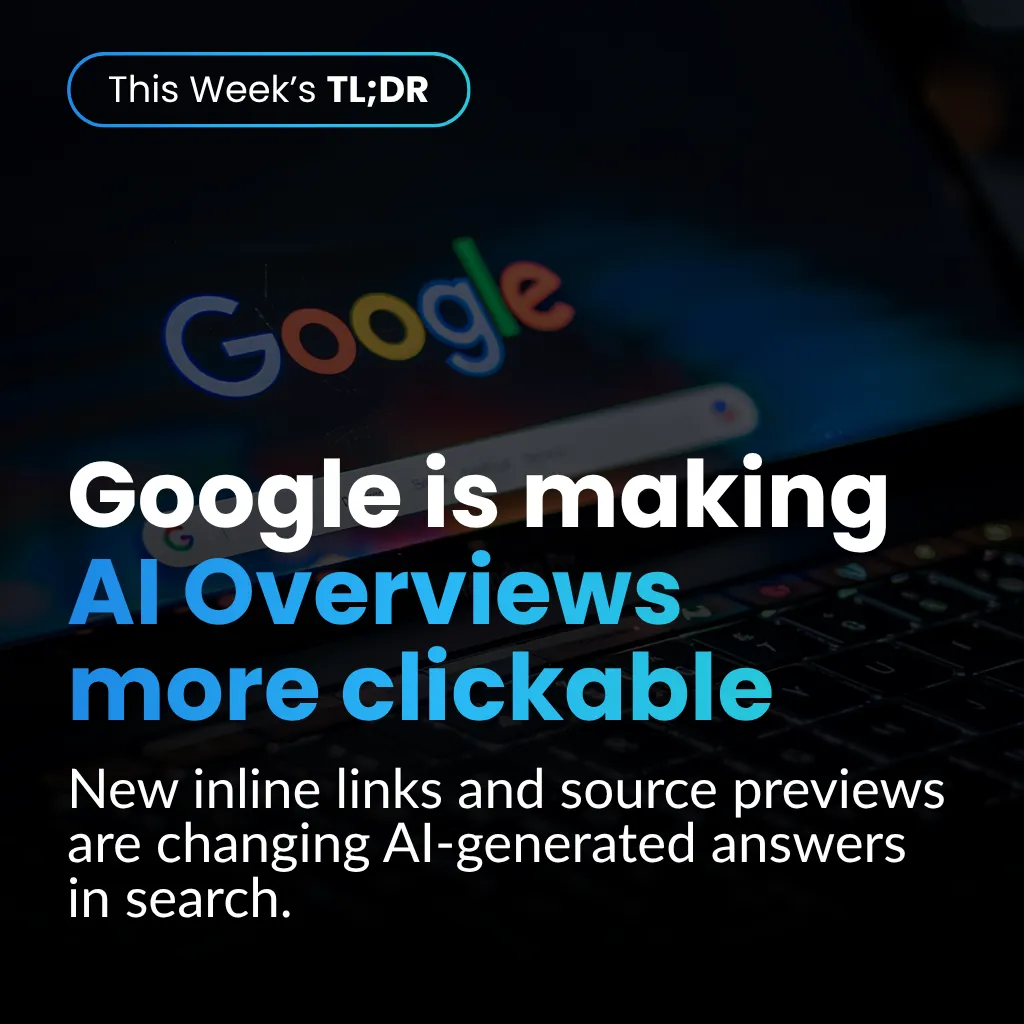
Google AI Mode is changing how customers find, trust and click on businesses in search. As Google AI Mode becomes more visible across Search, businesses need to understand how inline links, AI Overviews and source previews affect SEO, content strategy and lead generation.
This isn’t just another Google Search AI update. It changes where your brand needs to appear, how your content earns trust, and how SEO and AI search should be measured.
Google has started adding more links directly inside AI Mode and AI Overviews. These links appear beside the relevant text in AI-generated answers, giving users a clearer path to source websites. On desktop, Google is also testing hover previews, so users can see more context about a source before they click.
For business owners, that matters. If your content is cited inside an AI answer, it can shape a customer’s first impression before they ever visit your website.
Google AI Mode is designed to help users explore more complex questions with AI-generated responses, follow-up prompts and linked sources. The latest change makes those source links more visible and more useful.
Instead of placing citations away from the main answer, Google is adding inline links next to the specific text they support. That means users can move from an AI answer to a source page with less friction.
For marketers, the key takeaway is simple: Google AI Mode is making source selection more visible, which means brands need content that’s clear enough to be cited and useful enough to earn the click.
This changes the way businesses should think about SEO. It’s no longer enough to chase rankings alone. Your content also needs to be structured, useful and trustworthy enough to appear as a source inside AI search results.
Inline links in AI Overviews mean Google is making source visibility more contextual. Your content won’t just need to rank. It’ll need to answer specific parts of a query clearly enough to be cited beside the AI-generated response.
That means SEO and AI search now overlap in three key areas:
Google AI Mode doesn’t make SEO less important. It makes weak SEO easier to ignore.
Pages built around thin keyword targeting, generic rewrites or vague advice will struggle. Pages with useful detail, examples, original perspective and strong internal links have a better chance of being used as AI search citations.
That’s why businesses need to review their content now. If your website doesn’t clearly explain what you do, who you help, why you’re credible and what a customer should do next, AI search may skip over you.
Traditional SEO asks, “Where do we rank?”
AI search visibility in Google AI Mode asks, “Are we being cited, summarised, mentioned or skipped when Google answers the buyer’s question?”
That’s a different game.
A business might rank for a keyword like “google ads melbourne” but still miss out when AI Overviews summarise what to look for in a google ads agency. Another business might rank lower, yet earn a citation because its page explains pricing, process, results or common mistakes more clearly.
This is why content can’t sit on its own anymore. Your website, service pages, blog articles, local SEO, Google Business Profile, ads, CRM and reporting all need to work together.
For Hills Media clients, this is exactly why SEO, google ads management, landing pages and CRM tracking need to work as one lead system. Hills Media’s Full Lead System connects paid traffic, local SEO, automation, CRM visibility and reporting so businesses can track the full journey from click to customer.
Google AI Mode is built to help users explore questions more deeply. That means Google needs sources that can support detailed answers, not just surface-level definitions.
For content teams, the message is clear: stop writing one article for one keyword and hoping it ranks.
A page targeting Google AI Mode should also answer related questions like:
This is where many businesses will lose ground. They’ll publish one article, mention the keyword a few times, and wait.
A stronger approach is to build a topic cluster. One main article explains the issue. Supporting pages cover technical SEO, service comparisons, Google Ads strategy, conversion tracking, CRO and lead quality. Internal links help users and search engines understand how those pages relate.
For example, this article should naturally link to Hills Media’s Conversion Website service when discussing website structure, SEO foundations and lead capture. It should link to Growth Accelerator when discussing paid ads scaling, CRO, attribution and revenue-led optimisation.
Google AI Mode doesn’t remove the need for paid search. It makes the connection between SEO, Google Ads management and conversion tracking more important.
AI Overviews can reduce some low-intent clicks. But commercial search doesn’t disappear. It shifts.
Someone researching “what is Google AI Mode?” may stay inside the AI answer. Someone searching for “google ads melbourne”, “google ads agency” or “google ads management services” still has buying intent. They’re comparing providers, looking for proof and deciding who to contact.
That’s why paid search still matters.
Google Ads can protect bottom-of-funnel visibility while SEO and AI search visibility compound over time. But ads only work properly when the full system is set up: clean tracking, strong landing pages, clear offers, fast follow-up and reporting that shows which leads become customers.
This is where many campaigns underperform. Businesses pay for clicks, but the website doesn’t convert. Or they generate leads, but there’s no CRM process to track quality. Or they get enquiries, but no one knows which keyword, campaign or page drove the sale.
For businesses comparing google ads management services, this is why paid search, SEO and AI search need to be measured together, not treated as separate channels.
There’s no magic shortcut for Google AI Mode. The best way to optimise for Google AI Mode is to make each page easier for users and search engines to understand.
Start with the pages that already matter commercially: service pages, local landing pages, Google Ads landing pages, high-performing blog posts and conversion pages.
Then improve them in five areas.
Don’t just write “What is Google AI Mode?” Go deeper into the next question your buyer is likely to ask.
For example:
Each answer should be clear enough to stand alone. This gives Google cleaner material to cite and gives readers a reason to trust your brand.
A blog article can win attention. A service page wins the enquiry.
If your content explains the issue but your service pages don’t explain your offer, process and results, you’ll lose potential leads. Hills Media’s Conversion Website service is built around this problem: turning traffic into enquiries through better structure, messaging, SEO foundations and lead capture.
A high-converting page should include:
More visibility won’t help much if the page doesn’t convert.
Internal links shouldn’t be added just for SEO. They should help the reader take the next logical step.
If the article mentions lead capture, link to a conversion website service. If it mentions Google Ads management, link to a lead generation or growth service. If it mentions attribution, link to a page that explains reporting and optimisation.
This helps users move from education to action. It also helps Google understand which pages on your website carry commercial value.
AI search citations are source-led, so trust matters.
Useful trust signals include:
Google AI Mode may not cite the loudest brand. It’s more likely to cite content that directly supports the answer being generated.
AI search visibility only matters if it supports business growth.
You need to know which pages attract traffic, which channels generate leads, which campaigns create qualified enquiries and which enquiries turn into revenue.
That’s why Hills Media connects SEO, Google Ads, CRM tracking and reporting through its Full Lead System. The goal isn’t just more traffic. It’s a clearer path from visibility to booked calls, enquiries and customers.
If Google AI Mode is changing how people click from search, businesses need to adapt before competitors do.
Start by auditing your current content. Look at your service pages, blog posts, local SEO pages and Google Ads landing pages. Ask whether each page answers a real buyer question or simply repeats keywords.
Then map each page to a stage in the lead journey:
These Google Search AI updates show that source visibility is becoming part of the customer journey, not just a technical SEO issue.
You should also review your measurement. Don’t only ask, “Are we ranking?” Ask:
That’s where the real opportunity sits.
Google AI Mode is another reminder that visibility alone isn’t enough. To turn AI search visibility into enquiries, you need content that earns attention, ads that target buyers, pages that convert and tracking that shows what’s working.
If you’re reviewing SEO, Google Ads management, AI search visibility or lead generation, Hills Media can help you find the gaps.
Book a Free Lead System Audit with Hills Media and see where your website, ads, tracking and follow-up system can work harder for your business.