





 Contact us
Contact us
Contact us
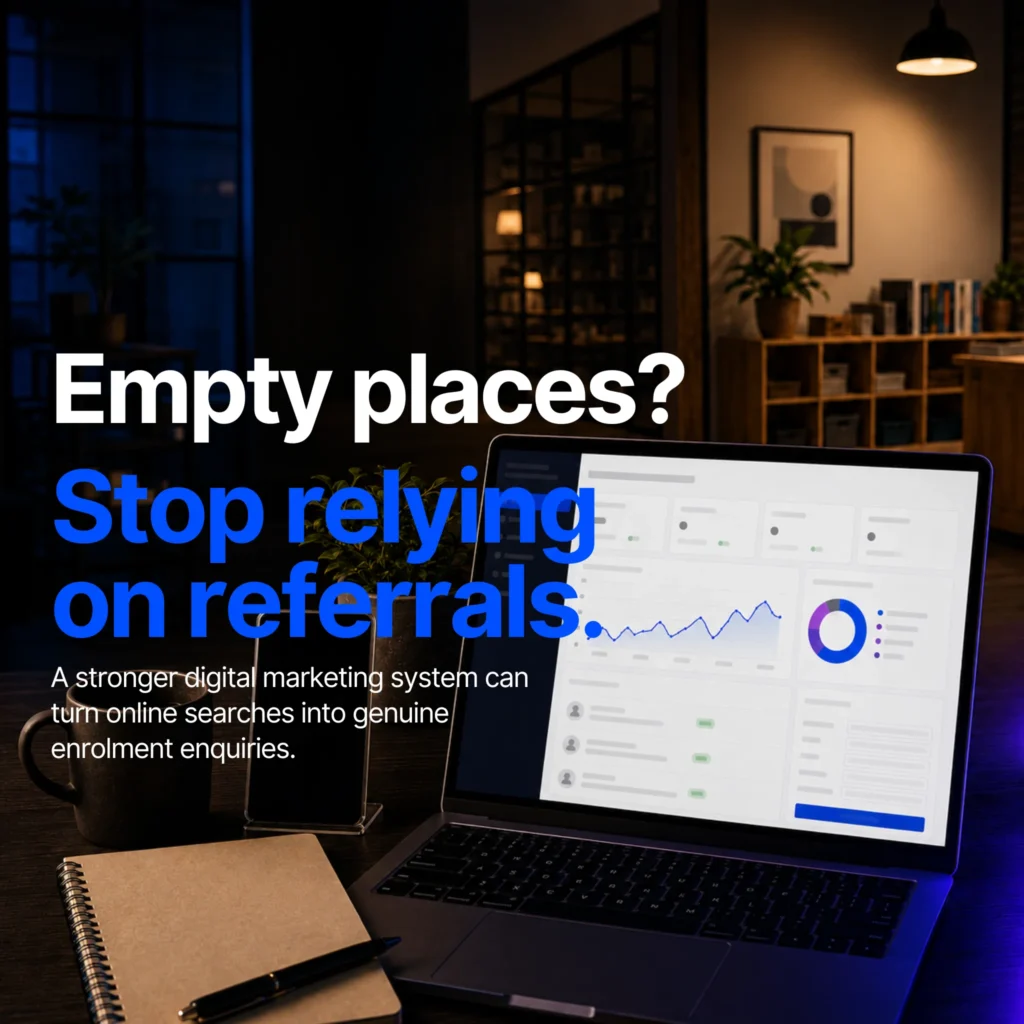
Childcare marketing has one job: fill empty places with the right families at the right cost.
Empty places drain revenue every week. Use $135 per day as a simple example. One empty full-time place costs $675 a week, about $2,700 every four weeks and $35,100 across 52 weeks.
Now multiply that across every room with spare capacity.
That is the commercial problem your marketing needs to solve.
Referrals still matter. Word of mouth still helps. But they do not give you control. You cannot forecast revenue on hope, Facebook comments or parents talking at kinder pick-up.
You need a repeatable enquiry and enrolment system. One that brings in the right families, tracks every lead, follows up fast and shows which channels create real bookings.
That is what strong childcare marketing solutions are built to do.
Most centres don’t have a marketing problem. They have a system problem.
The website gets traffic, but parents don’t enquire. Google Ads bring leads, but they’re low quality. Meta Ads get comments, but tours don’t book. The centre director follows up manually, then gets pulled back into ratios, staffing, parent calls, and daily operations.
The result is familiar:
This is where random activity fails.
A boosted post won’t fix a weak website. A new landing page won’t fix slow follow-up. SEO won’t fix a poor tour booking process.
You need the whole path to work.
Childcare marketing is the process of attracting qualified parent enquiries and converting them into centre tours, waitlist applications and enrolments.
Good childcare marketing connects local search, paid ads, website conversion, CRM follow-up and reporting. Each part has a job.
SEO captures parents already searching. Google Ads captures high-intent demand. Meta Ads builds awareness and retargets parents. Your website turns interest into action. Automation keeps every enquiry moving.
That is the difference between marketing activity and an enrolment system.
Before you spend more, diagnose the gap.
Look at your occupancy by room. Then look at the value of each vacant place. A baby room vacancy has a different revenue impact from a kinder room vacancy. A centre sitting at 94% occupancy has a different problem from a centre sitting at 68%.
Your marketing plan must match the pressure.
If you need enquiries now, Google Ads and landing pages do the heavy lifting. If you need stronger local visibility, SEO builds the base. If parents know you but don’t act, retargeting and follow-up fix the leakage.
Don’t start with channels.
Start with the revenue gap.
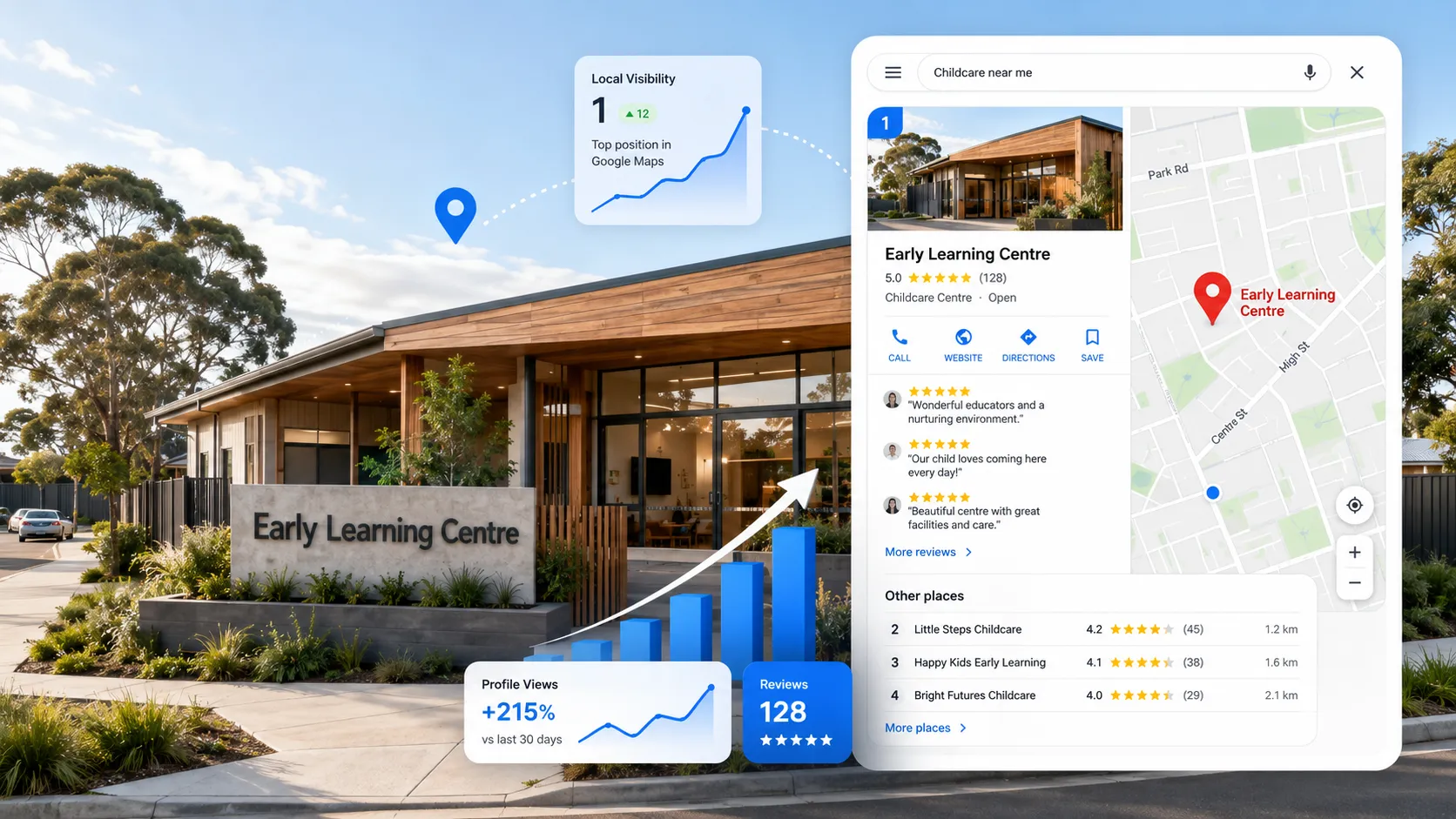
Parents search with intent. They type phrases like childcare near me, long day care in your suburb, kindergarten program, babies room, childcare fees and centre tour.
If your centre doesn’t show up, another provider gets the enquiry.
Local SEO for childcare should cover:
Parents compare more than proximity. They look at quality ratings, opening hours, photos, curriculum, reviews, fees and how easy it is to book a tour.
This is not guesswork. StartingBlocks lets families search for children’s education and care services, compare services and build a shortlist. It also explains that most services have a National Quality Standard rating, which helps families choose a service.
ACECQA says the National Quality Standard sets a national benchmark for early childhood education and care in Australia. It includes 7 quality areas, and services are assessed and rated against the NQS.
That means your marketing has to answer the same questions parents already use to compare you.
Your website needs to show location, trust, quality, availability and the next step before the parent calls.
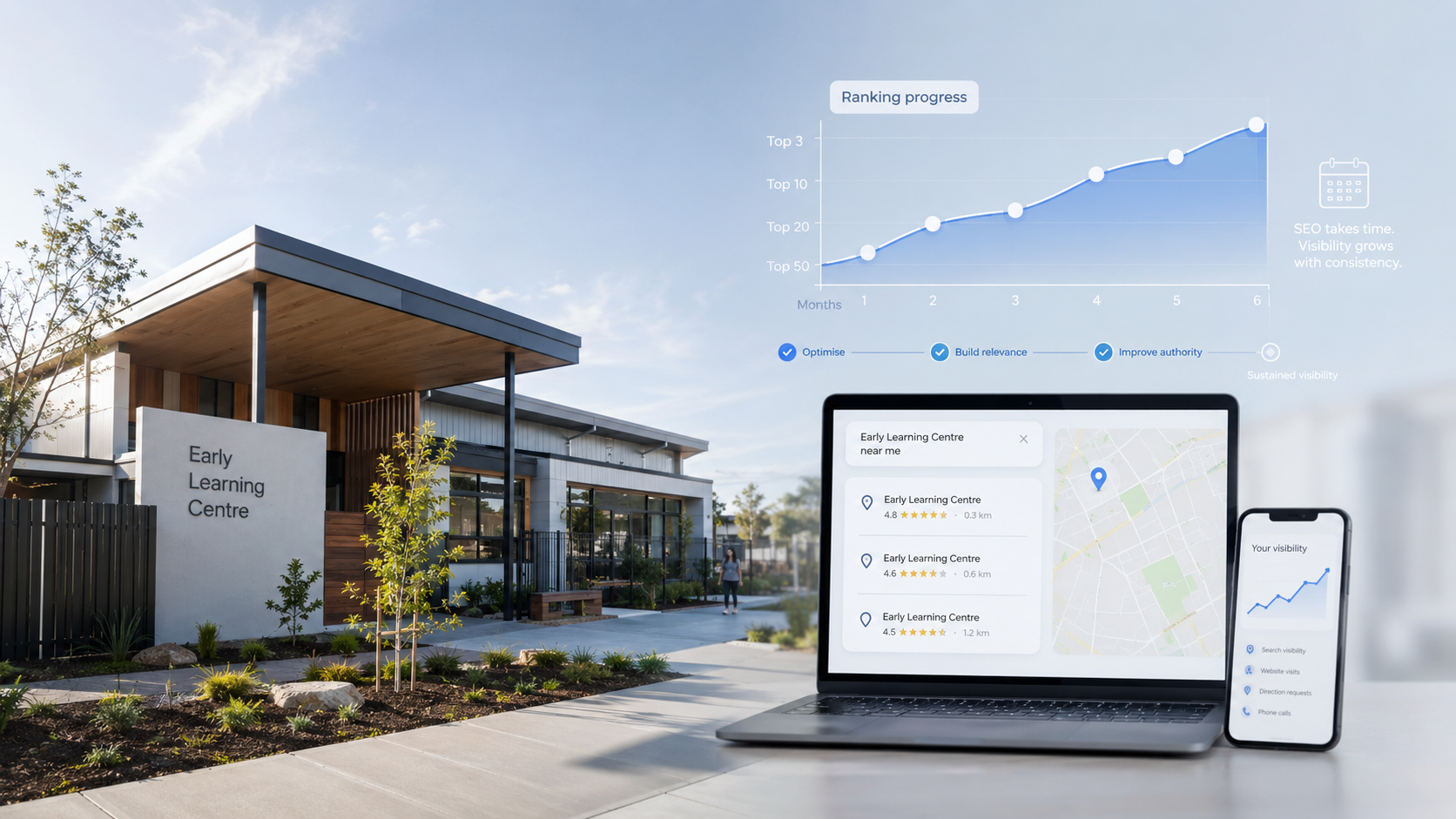
SEO takes time. Google Ads gives you control when occupancy pressure is already hurting revenue.
But childcare Google Ads fail when they send every click to a generic homepage. Parents don’t want to hunt through menus. They want the right centre, the right room and the next step.
A parent searching for babies room availability in Essendon should not land on a generic page that tries to cover every service and suburb.
The ad, keyword and landing page need to match.
Track the numbers that matter:
Cheap leads don’t matter if they don’t enrol. Expensive leads can still work if they turn into full-time places.
For providers that need ads, SEO, website conversion, CRM, automation and reporting connected, the Full Lead System is the better fit.
Parents don’t always search first. They notice your centre in small moments.
A mother sees your outdoor yard while scrolling after dinner. A father watches a short video about your kinder program. A parent visits your fee page, leaves, then sees a reminder to book a tour three days later.
That is how demand builds.
Meta Ads help you stay visible with local families before they need care. They work best when the creative shows real trust signals. Rooms. Outdoor space. Educators. Kindergarten program. Centre values. Parent concerns. Tour reminders.
This is where childcare marketing often gets lazy. Stock images and generic claims don’t work hard enough.
Your ads should answer real parent questions:
Meta also helps retarget parents who visited your website but didn’t enquire. That matters because a parent rarely chooses childcare from one touchpoint.
Your website is not a brochure. It is a conversion asset.
A parent who lands on your site should know three things fast:
Strong childcare websites include:
Child Care Subsidy also shapes parent decisions. Services Australia says CCS is worked out using family income, the hourly rate cap, recognised participation and the number of children in care. If your site does not explain fees, CCS basics and where parents can estimate support, you create friction at the exact moment they are comparing options.
Remove that friction.
Long forms kill action. Vague buttons create delay. Hidden contact details cost leads.
If your website is the first bottleneck, a Conversion Website fixes the foundation before you spend more on traffic.
Speed matters.
If a parent enquires today and hears back tomorrow, you have already lost momentum. In many centres, follow-up depends on whoever has time. That is not a system. It is a risk.
A basic CRM and follow-up sequence fixes this.
Every enquiry should trigger:
This protects your team from missed leads. It also gives owners and operators visibility.
You can see where enquiries drop off. Then you can fix the bottleneck.
A general agency can run ads. That does not mean it understands childcare occupancy.
The right childcare marketing company talks about cost per lead, tour bookings, room mix, follow-up speed and enrolment conversion. It asks about availability before pushing more traffic. It connects campaigns to real revenue.
You don’t need more disconnected reports. You need a clear view of what is working.
Ask these questions before choosing a partner:
If the answer is vague, keep looking.
The strongest childcare marketing solutions don’t treat SEO, ads, website and CRM as separate jobs.
They connect them.
SEO → Google Ads → Meta Ads → Website → CRM → Reporting
Each part has a job.
SEO brings in long-term local demand. Google Ads fills urgent gaps. Meta Ads builds and retargets demand. Your website converts the visit. Your CRM follows up. Reporting shows the real numbers.
That is how you reduce waste.
That is how you stop guessing.
Hills Media builds systems, not random campaigns. For centres ready to improve attribution, conversion rate and lead quality after the foundation is working, the Growth Accelerator is built for deeper optimisation.
How much does childcare marketing cost?
Childcare marketing cost depends on your occupancy gap, number of locations, competition, website quality and follow-up process.
A single-centre campaign with a weak website needs a different plan from a multi-site provider with existing traffic, CRM data and paid ads history. The right question is not “What does marketing cost?” The right question is “What does each empty place cost, and what system will fill it profitably?”
How long does childcare marketing take to work?
Google Ads and landing pages can generate enquiries faster because they target parents already searching. SEO takes longer because it builds local visibility over time.
The fastest gains usually come from fixing the biggest bottleneck first. That can be traffic, website conversion, follow-up speed or tour conversion. Guessing wastes money. Diagnosis comes first.
What makes childcare marketing different from general local business marketing?
Childcare marketing has a longer trust curve.
Parents are not buying a simple service. They are choosing who will care for their child. They compare location, fees, quality ratings, educators, safety, curriculum, reviews, availability and how the centre feels.
Your marketing needs to build trust before it asks for the tour.
Do childcare centres need SEO or Google Ads?
Most centres need both, but not always at the same time.
SEO builds long-term suburb visibility. Google Ads helps when you need enquiries now. If occupancy is under pressure, paid search and landing pages usually come first. If enquiries are steady but expensive, SEO and conversion work often reduce long-term reliance on paid traffic.
What should a childcare website include?
A childcare website should include clear centre pages, room information, real photos, trust signals, reviews, fee guidance, CCS information, tour booking forms and click-to-call buttons.
It should also load fast on mobile. Parents compare centres between work, pick-up, dinner and bedtime. If your site makes that hard, they move on.
What should I ask before hiring a childcare marketing company?
Ask how they track leads through to tours and enrolments. Ask whether they understand occupancy by room. Ask who owns the website, data and ad accounts. Ask how they connect ads, SEO, website conversion, CRM and reporting.
If they only talk about impressions, clicks and followers, they are not talking about enrolments.
If empty places are costing your centre revenue, don’t start with another boosted post.
Start with the bottleneck.
Book a Lead System Audit with Hills Media. We’ll review your website, traffic, enquiry flow, follow-up process and reporting, then show you where your enrolment system is leaking.